

Astromusicology.
Hear the Sound of Your Natal Chart.
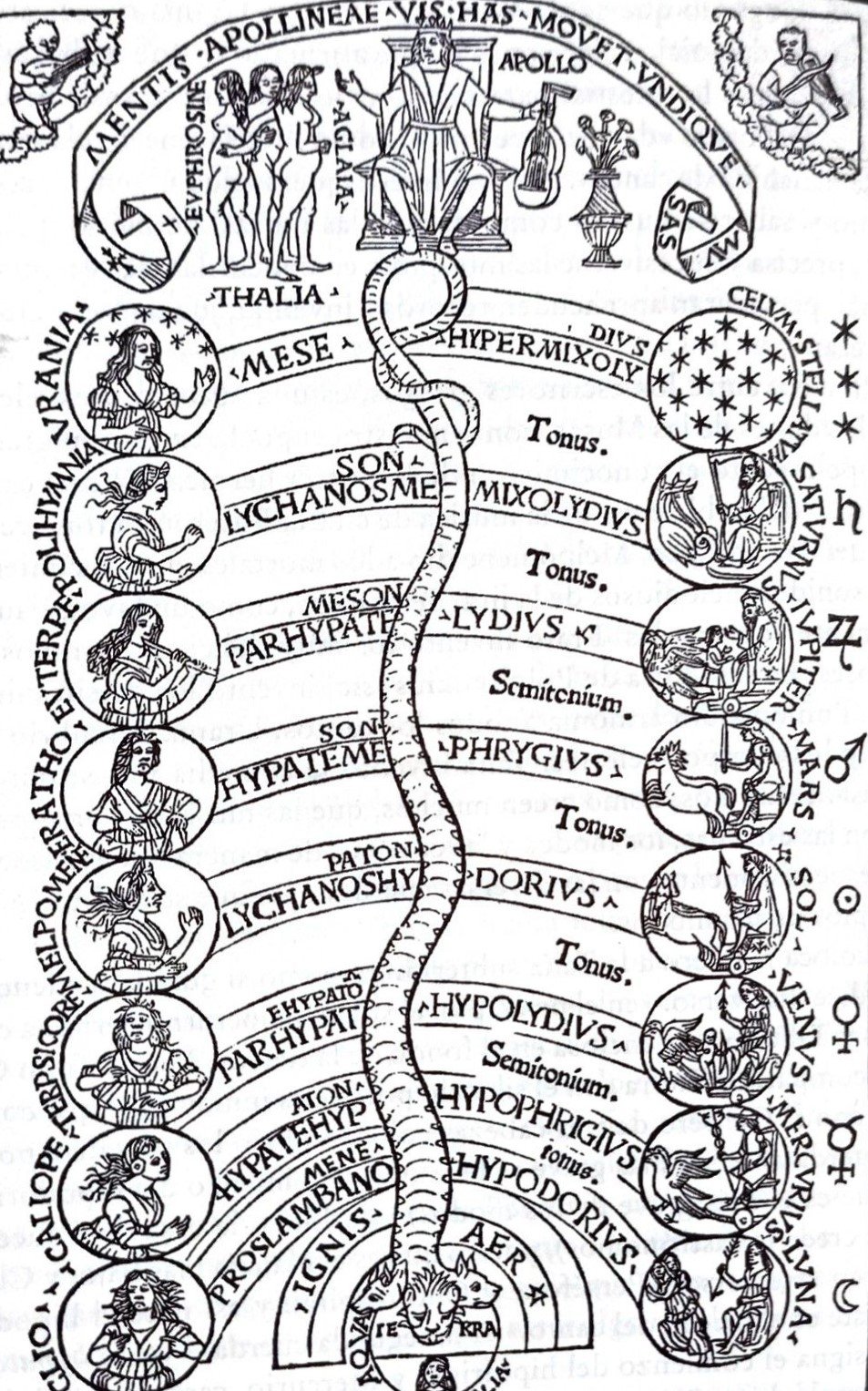
From Franchinus Gafurius’ Practica musicae (1496).
Just as astrology is predicated on the science of celestial mechanics yet relies on the artful interpretation of the astrologer; so too does music, which is based on the science of ratio, proportion and mathematical harmony, rely on the musician's artful interpretation in order to find its expression. This is the premise of astromusicology.
Jaime Paul Lamb specializes in harmonium improvisations that explore the intersection between astrology and music.
Using a theoretical method of planetary, zodiacal and aspectual correspondences Jaime Paul Lamb renders astrological placements, transits and signatures into harmonium improvisations. Using this system of astromusicological correspondences, any astrological chart may be musically analyzed and rendered into the component modes, tones and intervals needed for musical improvisation.
These tonal and modal correspondences to the seven visible planets were not intuited or “channeled” by Lamb because they “feel right, man.” They are supported by an astromusicological tradition running from antiquity to the Renaissance - from Ptolemy and Seneca to Ficino and Gafurius.
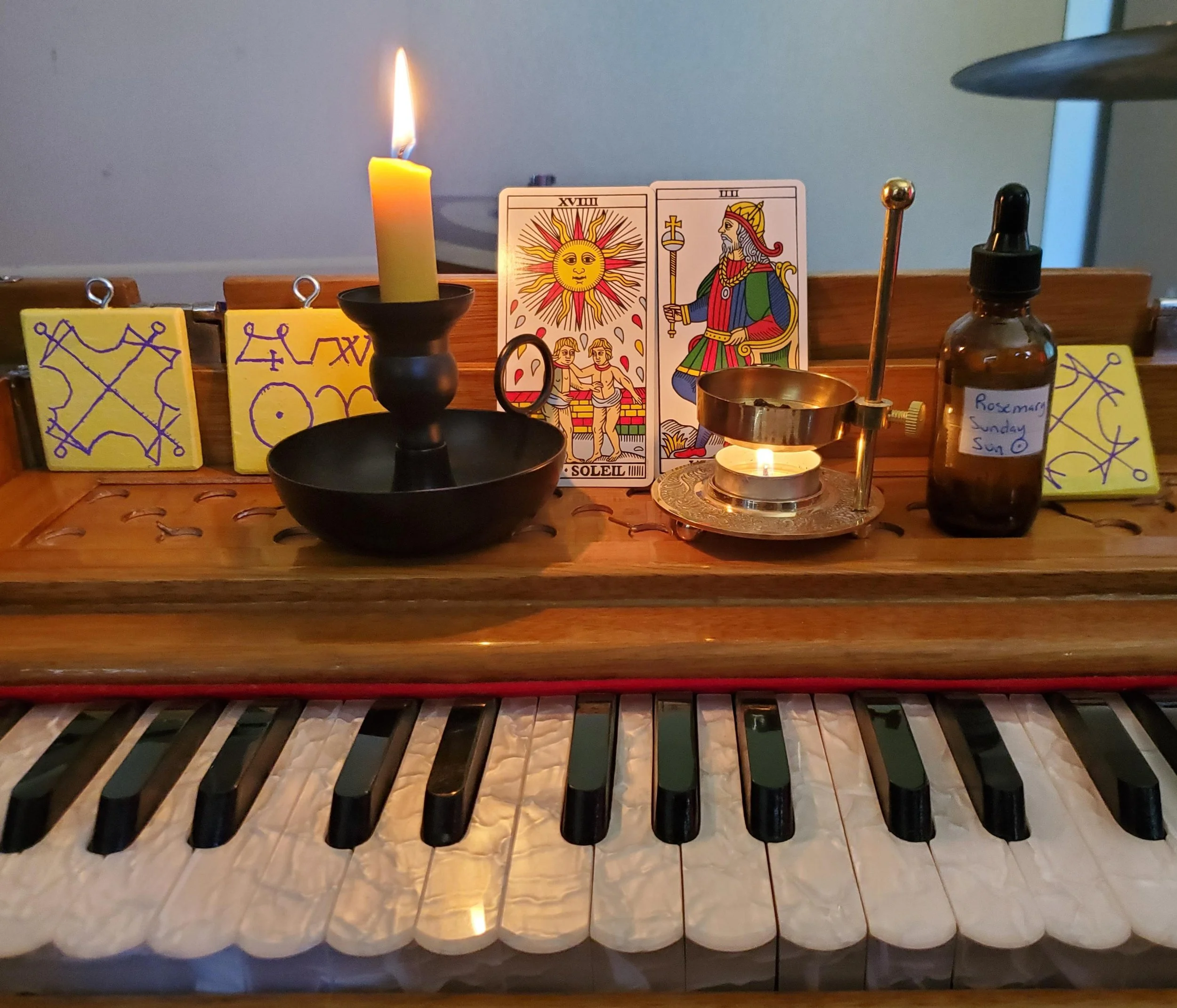
A talisman consecration employing certain intervallic relationships in the Dorian mode in the key of G, with other appropriate synthemata.
Astrology is a science and an art - a science, in that it is a computational/algebraic system using geometry to describe planetary relationships; and an art, in that the symbolic data yielded requires the interpretation and mythologization of an astrologer. Similarly, music is scientific in that it deals with subdivisions of time and duration, chords, ratios and harmonic relationships in the physical medium of air-pressure waves. Music is artistic in that these components are necessarily arranged as such to communicate abstract information, even eliciting emotional responses for the listener/interpreter.